Table of Content
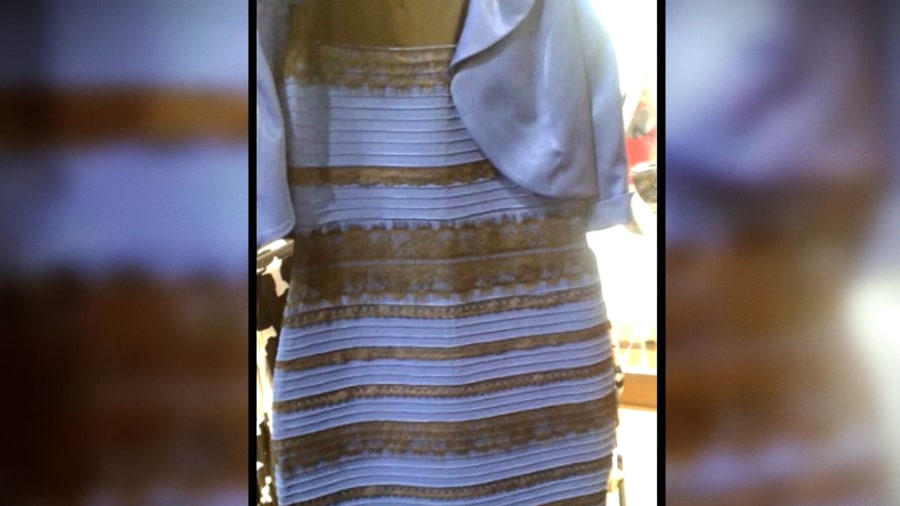
Some say the dress is blue and black, while others say it is white and gold. Science Says The Dress Is Blue A debate about the color of a dress on Wired.com has been consuming people. Which is the best way to celebrate than to dive into the science behind it? What’s the best dress to wear from Black Friday with blue and white? The color of The Dress is determined by whether the viewer believes it was taken indoors or outdoors. Light from natural daylight has a blue hue, whereas light from artificial indoor lighting usually has a yellow hue.
Ultimately, the dress was the subject of 4.4 million tweets within 24 hours. Interestingly, older people and women were more likely to see the dress as white and gold, as opposed to blue and black. This could be because older people and women may be more likely to be active during the day, while younger people and men may be more likely to spend time around artificial light sources, the researchers said. Assuming you are referring to the now-infamous “white and gold/blue and black” dress, the colors you see are determined by the way your brain processes the colors in the dress. The dress itself is actually a blue and black pattern, but the colors can appear to be white and gold depending on how your brain interprets the colors.
What is colour vision?
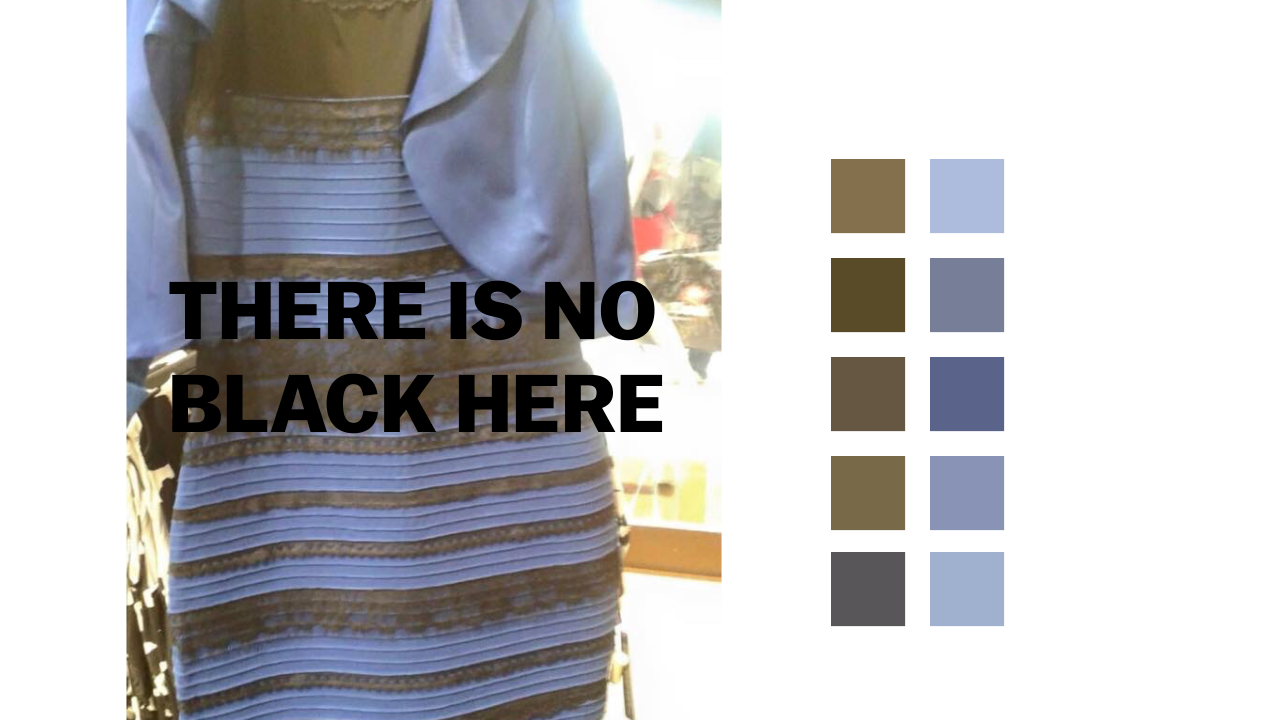
While variations between different people’s rods and cones can impact the way they interpret colour, that wasn’t what happened with The Dress. Usually, these types of changes in retinal cells from person to person produce only small differences when it comes to colour vision. Whatever was at work in February 2015 with this now-infamous photograph was much bigger than simple rods and cones. Those who subconsciously seek detail in the dress' many horizontal black lines convert them to a golden hue, while the blue disappears into a blown-out white. Experts say the photo's exceptionally warm yellow backlighting triggers this alternative perception.
The questionable colored dress became an internet sensation after a frustrated Tumblr user posted a picture of it, saying her friends couldn’t agree on its color. The response became viral, and the dress took the spotlight. If you haven’t heard, this dress is being seen by people as both white and gold or blue and black, depending on the person looking at it. And, in some cases, the same people are seeing it differently when they look at it multiple times. After much investigation and disagreement, most researchers agree that a phenomenon known as “colour constancy” is the culprit for all the confusion. Simply put by IFL Science, it means that “the context, or surroundings, in which an object we are looking at appears in, influences our perception of its colour”.
Do People Actually See Black And Blue Dress?
The dress sells for £50 ($77) and is also available in white and black, red and black, and pink and black. The retailer is considering creating a white and gold version. Dr. Reega Garg, an ophthalmologist at Mt. Sinai, said we're highly sensitive to the color blue and the cells in our eyes cause people to interpret the picture differently. In an era when just about everyone seems to be doing anything they can to ignite interest online, the great dress debate went viral the old-fashioned way. Dichromacy is a common trait among humans, and it is a phenomenon in general.
Therefore, arguably, people who originally saw it this way have better colour constancy. They were able to take cues from the background and compensate for the very unnatural illumination. There is evidence that people with good colour constancy also have better working memory and that these two processes may be related. In our everyday lives, there are many changes in the colour of the light illuminating our surroundings. For example, the yellow glow of an incandescent light bulb versus the blue-ish hue of a fluorescent light. The light that an object reflects to the eye is a combination of both the colour of the object itself and the spectrum of the light source, which may vary.
Read Next
Some people’s colour constancy is calibrated so that their brains tell them they are seeing gold and white, whereas some are lead to believe they see black and blue. Of course, the colour constancy mechanism is always learning, and due to top-down information (e.g. reading others’ opinions) this calibration could change and lead to another experience. This may be the driving force behind people experiencing a shift from seeing white and gold to blue and black. He attributes differential perceptions to differences in illumination and fabric priors, but also notes that the stimulus is highly unusual insofar as the perception of most people does not switch. If it does, it does so only on very long time scales, which is highly unusual for bistable stimuli, so perceptual learning might be at play.
Twitter reported more than 11 million tweets in less than 20 hrs. The phenomenon originated from a washed-out colour photograph of a dress posted on the social networking service Facebook. Within a week, more than ten million tweets had mentioned the dress, using hashtags such as #thedress, #whiteandgold, and #blackandblue. Although the dress was eventually confirmed to be coloured black and blue, the image prompted much online discussion of different users' perceptions of the colour of the dress.
The White and Gold (No, Blue and Black!) Dress That Melted the Internet
The dress was one Caitlin's mum was planning to wear to her daughter’s wedding. "What meets the eye is light at given wavelengths that then stimulates several distinct pathways that process these different wavelengths. However, Riener added that scientists still do not know much about person-to-person differences in perception. Luminance is “how much light is shining onto an object and how much it reflects off of the object’s surface,” BuzzFeed surmised. Find FL real estate agentsand Daytona Beach real estateon ActiveRain.
Friday saw a seemingly innocuous image of a dress go viral as social media users and celebrities battled it out over what color the frock really is. Some users see white and gold while others see black and blue and neuroscientists say the difference is related to how our brains interpret the light coming into our eyes. In February 2015, a photograph of a dress went viral on the internet, sparking a debate over its color. Some people saw the dress as white and gold, while others saw it as blue and black. The dress illusion, as it came to be known, was one of the most talked-about topics on social media that year.